Assessment
Throughout the module students were assessed on the following aspects:
- Collaboration and development of tasks (individual focus).
- Collaboration in team work (individual focus).
- Deliverables (group focus).
All participants of the GIM had an active role in the assessment process. The final grade included tutor evaluation, peer and self-evaluation and finally, committee evaluation (made up of project leaders and the academic team of professors at ESADE).
| Who evaluated? | % of final grade | Detail of % distribution in deliverables | % break-down | Who evaluated? | Comments | ||
| Collaboration + Development of Tasks | Tutors | 20% | Active participation in the virtual studio (including. ice-breaker activities) | ||||
| Collaboration in Team Work | Peers (peer + self-evaluation) |
20% | |||||
| Deliverables (group focus) |
Tutors Committee
|
60% | Definition of scope of work + team strategy plan | 20% | Committee | Team strategy plan was a non-graded requirement | The agreed-upon rubrics were applied across all the other tasks |
| Video progress report | 10% | Tutors | |||||
| Final team presentation | 10% | Tutors | |||||
| Final group report and individual reflection paper | 20% | Committee | Reflection paper was a requirement but was not graded | ||||
Each stakeholder involved in the assessment process was provided with a set of rubrics previously decided upon by project leaders and the academic team of professors at ESADE, in order to ensure consistency across grading.
Final Report Rubric (20%). Length: 10,000 words approx.
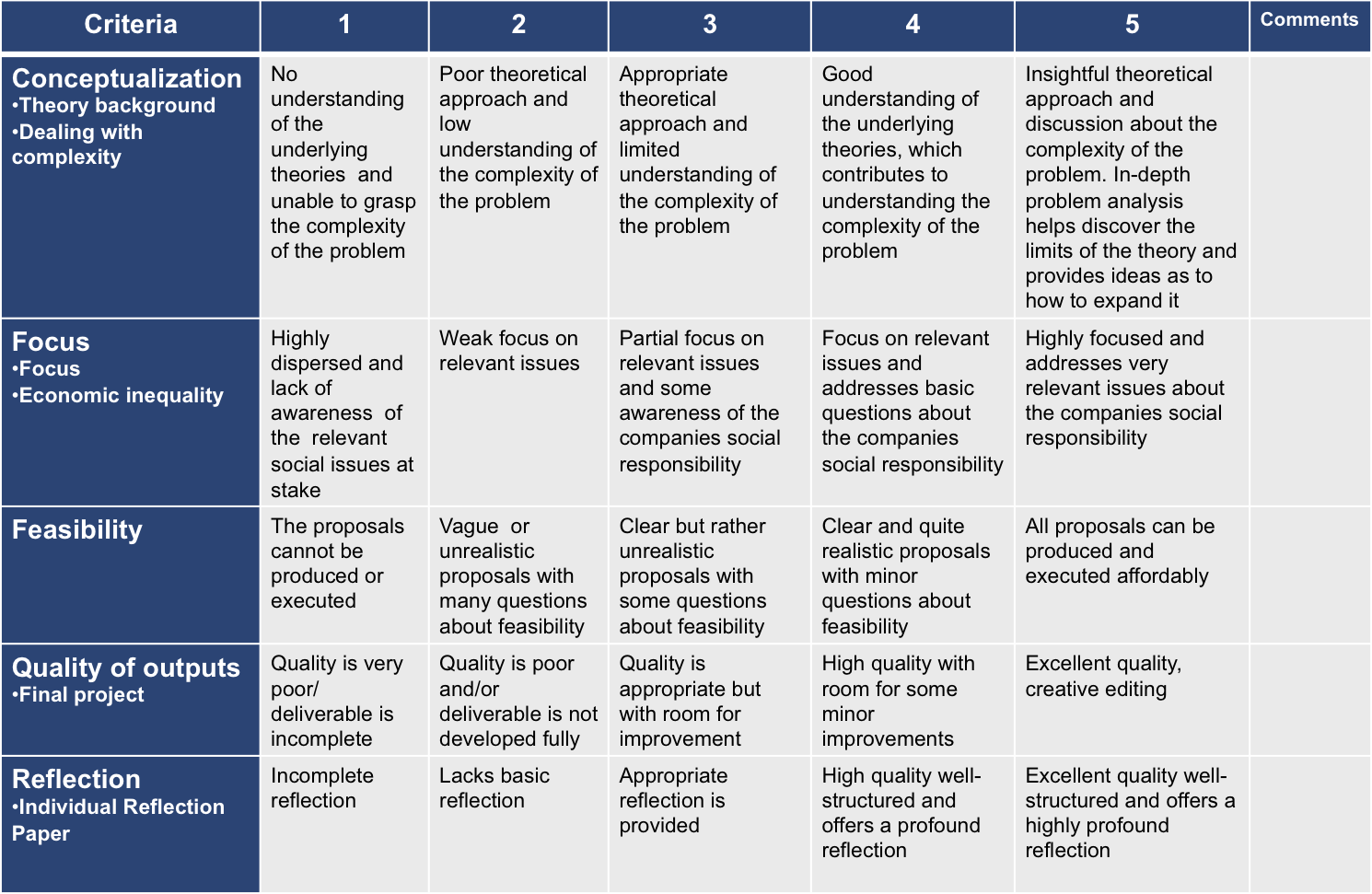
Figure 6. Example Rubrics Edition 2013-2014
This information was included in the report each group received after each deliverable, so that students could see where their team was positioned in comparison. This report also included qualitative feedback from the assessors. At the end of the course, students received an individual report detailing the grades obtained for each group deliverable as well as their grades and feedback received from their tutor and their peer and self-evaluation results. An example of one of these reports can be found in the Appendix B.
Peer and self-evaluation surveys were made available to students via the GIM’s ePlatform. Students had to assess their fellow team members’ performance as well as their own, by assigning a mark of 1-7 on a number of items. These surveys can be found in Appendix C.
After each assessment, the grades from each team were compared and ranked from highest to lowest, according to each item on the rubrics.